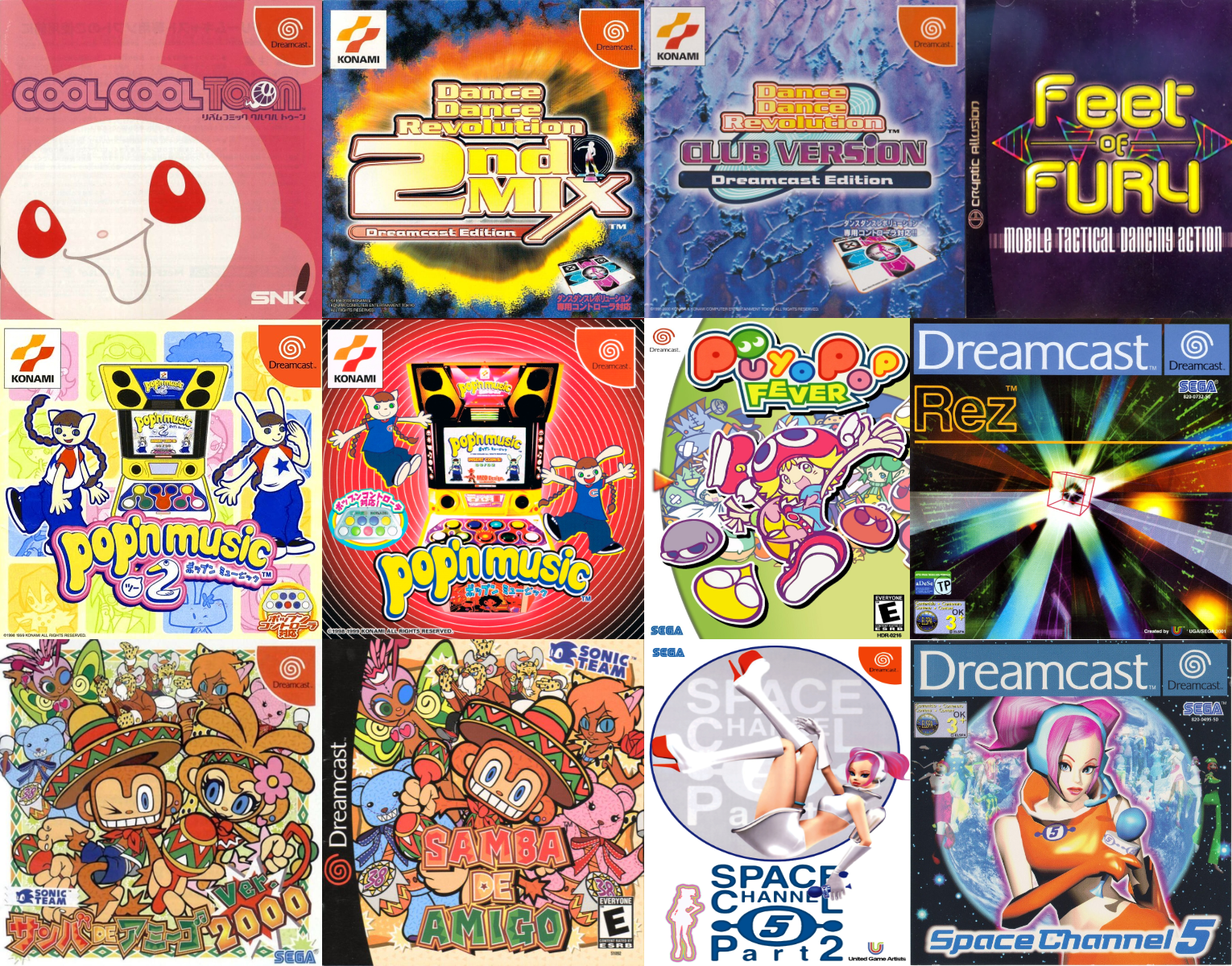
Samba De Amigo is one of the most distinctive rhythm games on the Dreamcast, turning music into an energetic physical experience with its famous maraca controllers. Players shake the maracas at different heights and in time with colorful on-screen markers, creating a simple concept that becomes surprisingly challenging at higher difficulty levels. Its Latin-inspired soundtrack, bright presentation, humorous characters, and enthusiastic atmosphere give it enormous personality, while the multiplayer modes make it particularly entertaining with friends. The Dreamcast version is at its best with the dedicated Samba de Amigo controllers, which make the game feel far more natural and engaging than a standard controller. Even today, it remains one of the console’s most memorable arcade-style experiences.
Space Channel 5: Part 2 builds upon the stylish rhythm-action formula of its predecessor with more elaborate musical sequences, larger production values, and a greater variety of characters and situations. Players control the charismatic reporter Ulala as she battles enemies and rescues hostages by accurately matching button presses and directional commands to the rhythm of the music. The timing-based gameplay is simple to understand but demanding to master, particularly during the later stages where the sequences become increasingly complex. Its retro-futuristic visual design, colorful characters, catchy soundtrack, and deliberately campy presentation give it a unique personality that few other rhythm games can match. Although its gameplay is relatively short and repetitive by modern standards, Part 2 remains a wonderfully polished and entertaining Dreamcast rhythm experience.
Rez is an unusual combination of rhythm game, rail shooter, and interactive audiovisual experience, transforming abstract geometric environments into constantly evolving musical landscapes. Players guide a wireframe avatar through surreal stages, locking onto enemies and destroying them in time with the game’s electronic soundtrack. Every action contributes to the music, meaning that successful play gradually builds a satisfying connection between the player’s movements, sound effects, and rhythm. The minimalist graphics may initially appear sparse, but their deliberately abstract style works perfectly with the hypnotic atmosphere and pulsating electronic music. Rez is less about traditional rhythm-game mechanics and more about immersion, making it one of the most experimental and memorable games in the Dreamcast library.
Space Channel 5 is a stylish rhythm-action game that combines colorful science-fiction visuals with a deliberately retro presentation inspired by 1950s and 1960s pop culture. Players control Ulala, a television reporter who must follow musical commands by pressing buttons in rhythm while fighting enemies and rescuing hostages. The gameplay is straightforward, but its strict timing requirements can make later sequences surprisingly demanding. The soundtrack is catchy and the presentation is packed with personality, while Ulala herself became one of Sega’s most recognizable characters of the era. Although the game is relatively short and offers limited gameplay variety, its distinctive art direction, infectious music, and unique combination of rhythm mechanics and adventure make it a standout Dreamcast title.
Feet of Fury is an unusual Dreamcast rhythm game that combines dance-game mechanics with a quirky underground aesthetic and an emphasis on multiplayer competition. Players must follow directional prompts and match their movements to the music, with the challenge increasing as songs become faster and more complex. The game is notably less polished and elaborate than major arcade productions such as Dance Dance Revolution, but its homebrew-style presentation gives it a distinctive charm. The soundtrack provides a decent selection of electronic and dance-oriented tracks, while the multiplayer modes offer much of the game’s appeal. It is a relatively obscure Dreamcast release, but rhythm-game enthusiasts looking for something outside the mainstream will find plenty to appreciate.
Cool Cool Toon is a colorful Japanese rhythm game that combines music-based gameplay with an unusual hand-drawn visual style. Players control cartoon characters and must accurately follow rhythmic prompts while performing energetic dance and musical routines. The presentation is particularly appealing, with bright colors, exaggerated animations, and a playful cast that gives the game an almost comic-book-like personality. Its rhythm mechanics are easy to grasp but become considerably more demanding as songs progress, rewarding players who develop a strong sense of timing. Unfortunately, its Japanese-only presentation and relatively obscure status kept it from receiving the international attention enjoyed by games such as Samba de Amigo or Dance Dance Revolution, but it remains an interesting and charming Dreamcast rhythm title.
Dance Dance Revolution 2nd ReMix brings Konami’s enormously popular dance-game formula to the Dreamcast, challenging players to step on directional arrows in time with energetic dance music. The basic concept is immediately accessible, but the increasingly complicated step patterns provide considerable depth for experienced players, especially when played with a dance mat. The soundtrack is filled with fast-paced electronic, pop, and club-oriented tracks that perfectly complement the frantic gameplay. While the Dreamcast hardware was not the primary platform for the series, the home version captures much of the arcade experience and provides plenty of replay value through its difficulty levels and score-chasing mechanics. For fans of rhythm games, it is one of the more essential Japanese Dreamcast releases.
Dance Dance Revolution: Club Version – Dreamcast Edition adapts the arcade-focused Club Version of Konami’s famous dance series for Sega’s console, delivering another substantial collection of rhythm-based challenges. Players must hit directional arrows with precise timing while increasingly complex patterns scroll across the screen, making the game accessible to newcomers but extremely demanding at higher levels. The club-oriented soundtrack fits the game’s energetic presentation, and using a dance mat transforms the experience into a genuine physical workout as well as a video game. Its content is somewhat specialized compared with more mainstream Dreamcast releases, and its Japanese arcade origins can make it less approachable for newcomers. Nevertheless, it is a strong choice for anyone interested in the Japanese side of Dreamcast rhythm gaming.
pop’n music is Konami’s colorful rhythm game built around a large collection of oversized buttons, allowing players to perform songs by hitting the correct buttons in time with the music. Rather than relying on a conventional dance pad, the game emphasizes hand-eye coordination and increasingly complicated button patterns, giving it a very different feel from Dance Dance Revolution. Its bright cartoon presentation, cheerful characters, and broad musical selection give it an immediately approachable personality, while the higher difficulty levels provide substantial challenges for dedicated players. The Dreamcast version retains the distinctive Japanese arcade character of the series and is particularly enjoyable with the appropriate specialized controller. For players willing to overcome its language and hardware barriers, it offers a surprisingly deep rhythm experience.
pop’n music 2 expands on the original with more songs, additional challenges, and the same colorful arcade presentation that made the series distinctive. The gameplay revolves around hitting the correct buttons in rhythm as notes reach their targets, with increasingly dense patterns testing both timing and coordination. The cheerful visuals and animated characters contrast nicely with the demanding gameplay, creating an experience that is accessible on the surface but capable of becoming extremely challenging. Like its predecessor, the game benefits greatly from the dedicated pop’n music controller, although the standard Dreamcast controller can still be used. It is a niche Japanese release, but its polished rhythm mechanics and huge personality make it an appealing title for dedicated Dreamcast and rhythm-game collectors.
Puyo Puyo Da! combines the familiar competitive puzzle mechanics of the Puyo Puyo series with a strong emphasis on rhythm and musical presentation. Players still need to match colored Puyos and create chains, but the game’s musical elements and timing-oriented presentation give the familiar formula a different character. The colorful graphics, charming characters, catchy music, and fast-paced matches make it easy to pick up, while mastering chain combinations provides plenty of strategic depth. The game is particularly entertaining in multiplayer, where the simple rules can quickly lead to intense battles between experienced players. Although it is more of a puzzle-rhythm hybrid than a traditional music game, Puyo Puyo Da! is an enjoyable and distinctive entry in the Dreamcast’s Japanese library.
Samba de Amigo ver. 2000 expands upon the original Samba de Amigo with additional songs, characters, gameplay features, and refinements to the maraca-based rhythm mechanics. The core experience remains wonderfully simple: players shake the maracas at different heights and follow the rhythm of the music, but the increased song selection and more demanding challenges give experienced players plenty of reasons to return. The bright presentation, Latin-influenced soundtrack, energetic animations, and humorous atmosphere make every performance feel like a colorful arcade show. As with the original, the dedicated Samba de Amigo controllers are essential to experiencing the game at its best, turning rhythm gaming into a genuinely physical activity. For Dreamcast owners interested in music games, ver. 2000 is arguably one of the most enjoyable and content-rich rhythm titles on the system.
———————————————————————————–
Samba De Amigo
Sonic Team’s vibrant rhythm title brought maraca-shaking arcade chaos directly into the living room, standardizing a colorful six-position directional gameplay scheme. Players shake physical maraca controllers to the tempo of energetic Latin pop tracks, creating an infectious sense of movement and party atmosphere. Its visual flair, whimsical monkey mascot Amigo, and precise motion tracking made it one of the Dreamcast’s most iconic and joyful musical showcases.
Space Channel 5: Part 2
Refining the quirky call-and-response mechanics of the original, Space Channel 5: Part 2 expands Ulala’s musical broadcast with smoother visuals, more dynamic instrumentals, and a higher level of rhythmic polish. The addition of guitar duels, band-battle scenarios, and a memorable cameo by Michael Jackson as Space Emperor Michael gives the campaign an undeniable charm. With tighter inputs and a vibrant disco-funk soundtrack, it stands as a peak spectacle for Dreamcast rhythm gaming.
Rez
Tetsuya Mizuguchi’s visionary rail-shooter fuses rhythm action with vector line graphics to deliver an immersive synesthetic journey. Players lock onto virus clusters in an abstract cybernetic network, with every shot and lock-on laser adding percussion and synth elements to the evolving electronic score. The seamless blending of force feedback, dynamic music progression, and mesmerizing vector art turned Rez into a timeless artistic landmark.
Space Channel 5
Introducing the world to retro-futuristic news reporter Ulala, Space Channel 5 captured hearts with its bold pastel aesthetics, swingin’ 60s lounge soundtrack, and rhythmic memory tests. Players repeat movement and sound cues given by invading Morolians using directional inputs and action buttons to rescue hostages and boost broadcast ratings. While punishingly strict with its timing windows, its sheer charisma and iconic style define Sega’s experimental Dreamcast era.
Feet of Fury
Developed by Cryptic Allusions and published as an unlicensed homebrew release, Feet of Fury brought homebrew arcade-style dance action directly to Dreamcast owners without requiring system modifications. The game supports dance mats and standard controllers, pairing rhythm gameplay with a cartoonish cast and multiple game modes like “Typing of the Fury.” While simpler in production than major studio releases, its energetic original soundtrack and status as a pioneering indie console release give it a special place in Dreamcast lore.
Cool Cool Toon
SNK’s cell-shaded Dreamcast exclusive brings a distinct hip-hop and pop flair to the rhythm genre with a unique circular input system. Players navigate a marker around a ring using the analog stick while timing button presses to matching prompts radiating from the center. Its energetic original soundtrack, vivid animation style, and expressive character designs create a distinct arcade identity that remains a cult favorite among import enthusiasts.
Dance Dance Revolution 2nd Mix
Konami brought the arcade stepping phenomenon to the Dreamcast with an incredibly faithful port of 2nd Mix, offering razor-sharp inputs and classic Eurodance tracks like “Butterfly” and “Dub-I-Dub.” Utilizing either the standard controller or dedicated floor mats, players hit four-panel directional arrows in sync with the beat. It remains a crucial milestone in home arcade rhythm gaming, capturing the raw excitement of early 2000s arcade culture.
Dance Dance Revolution Club Version – Dreamcast Edition
Designed to bridge the gap between Dance Dance Revolution and Konami’s Beatmania series, this specialized edition features an expanded tracklist focused heavily on club mixes, hip-hop, and house music. It allows for linked gameplay options and unique crossover audio tracks, delivering a distinctly urban beat-driven experience. The game caters directly to hardcore rhythm fans looking for deeper musical variety and authentic arcade link-up mechanics.
pop’n music
The home port of Konami’s whimsical arcade hits brings the cheerful nine-button rhythm controller action into the living room with bright graphics and catchy pop compositions. Players hit colored notes as they fall to the bottom line, keeping their satisfaction meter high to clear each stage. Its accessible aesthetic hides a steep difficulty curve, establishing a foundation that grew into one of Bemani’s longest-running franchises.
pop’n music 2
Building directly upon its predecessor, pop’n music 2 expands the track selection, refines the note-charting, and introduces additional game modes that cater to both beginners and seasoned rhythm veterans. Featuring guest appearances from other Bemani series tracks and enhanced visual animations, it delivers a more polished console experience. It solidified the series’ popularity on home hardware, proving the appeal of its colorful, chaotic arcade gameplay.
Puyo Puyo Da!
Spinning off Sega’s famous puzzle franchise into a head-to-head dance battle game, Puyo Puyo Da! replaces falling puyo gel blocks with rhythm-matching gameplay. Players time button prompts in sequence to perform dance moves, building up power meters to launch disorienting attacks at their opponents. Featuring 3D models of beloved characters like Arle and Carbuncle boogying to lively Japanese pop tunes, it offers a quirky and humorous twist on standard rhythm mechanics.
Samba de Amigo ver. 2000
Released exclusively in Japan as an expanded upgrade, Samba de Amigo ver. 2000 drastically increased the content of the original game with dozens of new songs, additional mini-games, and new gameplay modes like Hustle Mode. Hustle Mode added random pose demands and complex movement prompts to test even veteran players’ reflexes. It serves as the definitive version of Sega’s maraca-shaking masterpiece on the Dreamcast.
———————————————————————————
Samba De Amigo – The definitive Dreamcast party game. Even without the iconic maraca controllers it still works, but with them it’s pure joy. You shake high, middle, or low to a wonderfully cheesy Latin soundtrack – Ricky Martin, Santana, Quincy Jones – and the game judges your rhythm and posing. It’s goofy, physical, colorful, and impossible to play without smiling. The charm is in how it doesn’t take itself seriously at all.
Space Channel 5: Part 2 – Japan-only on Dreamcast but worth importing, this is everything that made the first game great, but bigger, weirder, and tighter. Ulala’s second adventure cranks up the production with more elaborate musical battles, Michael Jackson actually shows up this time, and the call-and-response gameplay feels much less forgiving and much more rhythmic. It’s campy sci-fi pop insanity at its peak, and the Dreamcast version looks fantastic in VGA.
Rez – Less a rhythm game and more a synesthetic trance. You fly on rails through a wireframe world that evolves from abstract vectors to pure transcendence, shooting enemies where every lock-on and explosion adds a layer to the music. The Dreamcast port is the original way to experience it, complete with support for the Trance Vibrator accessory. It’s short, hypnotic, and unlike anything else on the system – you don’t just play Rez, you feel it.
Space Channel 5 – Sega at its most stylishly bizarre. As reporter Ulala, you save the galaxy from aliens by mimicking their dance moves – up, down, left, right, chu! – to a funky 60s-inspired soundtrack. It’s short, the timing window is notoriously strict, and the story is pure nonsense, but the art direction, the music, and Ulala’s sheer charisma make it an absolute Dreamcast essential. It’s pure Tetsuya Mizuguchi magic.
Feet of Fury – A piece of history – the only commercially released indie Dreamcast game not to need a boot disc, and a rhythm game to boot. Made by Dan Potter, it’s a DDR-style arrow scroller with an original techno soundtrack and the ability to load your own MP3s and create step charts via a PC tool. It’s rough around the edges and obviously low-budget, but as a homebrew love letter to dance games and the Dreamcast itself, it’s charming and remarkably competent.
Cool Cool Toon – A deeply weird and wonderful Japan-only exclusive from SNK. You control a dancing avatar by moving an analog dial to match a spinning line, timed to a bizarre mix of jazz, pop, and surreal vocal tracks. The art style is wild, all bold colors and fluid cartoon animation, and the game is genuinely difficult. It’s the most experimental rhythm game on Dreamcast, and one that almost no one outside Japan played, which is a shame.
Dance Dance Revolution 2nd Mix – The Dreamcast port that brought the arcade phenomenon home properly. This is classic early DDR with 40+ tracks, from J-Pop staples like “Butterfly” to dance covers, and it supports the official Konami dance mat which still holds up. It doesn’t have all the modern conveniences, but the timing is solid and the presentation is pure arcade-perfect 1999. If you have a mat and some space, this is still how DDR is meant to be played.
Dance Dance Revolution Club Version – Dreamcast Edition – Essentially an expansion/appendix to 2nd Mix, focused on the remixes from the arcade Club Versions. The tracklist is heavier, darker, and more underground house/techno-oriented, curated from the Beatmania IIDX crossover era. It even lets you link up with 2nd Mix for more songs if you have both discs. Less beginner-friendly and more niche than 2nd Mix, but for fans of that late-90s club sound, it’s the better playlist.
pop’n music – The Dreamcast conversion of Konami’s adorable, button-mashing arcade game. Nine big colorful buttons, poppy Japanese tracks, and an incredibly cute art style. It’s deceptively hard – what looks like a kids game quickly becomes a finger-twisting nightmare on higher difficulties. The controller is expensive to import, but even on a standard pad it’s a bright, cheerful, and addictive alternative to DDR’s footwork.
pop’n music 2 – More of the same excellent formula, just refined and expanded. More songs, more characters, more difficulty levels, and a slightly better interface. The soundtrack leans even more into anime, J-pop, and Konami originals, and it retains that same lovely, bouncy charm. If you like the first one, this is an immediate upgrade. If you can find the dedicated controller, it’s one of the best rhythm experiences on the system.
Puyo Puyo Da! – Compile’s strange but delightful idea: what if Puyo Puyo characters had a dance battle? It’s a rhythm game where Arle and the gang dance to goofy J-pop and techno tracks, and you have to time button presses to keep them from falling over. It’s short, easy, and unabashedly silly, with classic Puyo humor and voice acting. Not a deep rhythm game, but as a fan-service spin-off, it’s endearing and very Dreamcast.
Samba de Amigo ver. 2000 – The definitive version of Samba. This Japan-only update takes the original game and adds a massive 14 new songs, including J-Pop hits like “Go Go Green” from Anpanman and “Mickey Mouse March”, plus a ton of quality-of-life fixes like a much better Hustle mode where you have to follow pose cards. It’s everything good about the first Samba De Amigo with more content, better balancing, and even more joyful absurdity. If you can only have one, make it this one.
———————————————————————————-
Samba De Amigo is less a video game and more a social experiment in joy, forcing players to shake a pair of plastic maracas in time with infectious Latin rhythms. While the dedicated maraca controllers are essential for the full experience, the game’s sheer energy and Sonic Team’s typical polish make it an unforgettable, albeit physically exhausting, highlight of the Dreamcast’s eclectic library.
Space Channel 5: Part 2 refines the original’s formula with faster beats and more complex routines, but its cult status remains tied to the Dreamcast’s unique charm; it’s a stylish and energetic rhythm game that never received the wider audience it deserved.
Rez is a transcendent audiovisual experience, a rail shooter where every action syncs with the electronica soundtrack to create a synesthetic trance state. Its minimalist wireframe aesthetic and Tetsuya Mizuguchi’s vision make it a legitimate argument for video games as art.
Space Channel 5 is a burst of pure, unfiltered late-90s Sega flamboyance, starring the iconic Ulala in a rhythm-based battle against alien invaders. Its short length and punishing lack of visual cues are drawbacks, but its incredible style, Michael Jackson cameo, and catchy tunes make it a memorable piece of Dreamcast history.
Feet of Fury holds the distinction of being the first commercially released independent Dreamcast game, a surprisingly competent dance mat title from hobbyist developer Cryptic Allusion. Its novel “Typing of Fury” mode offers a unique twist, and while it lacks the polish of Konami’s output, its low price and historical significance make it a worthy curio for collectors.
Cool Cool Toon is a Japanese-exclusive rhythm game from SNK that impresses with its fantastic motion-captured animation and unique analog-stick-based gameplay. It’s a genuinely fun and stylish title, but its impenetrable Japanese vocal soundtrack and lack of a Western release have kept it as a hidden gem for import-savvy Dreamcast fans.
Dance Dance Revolution 2nd Mix brought the arcade phenomenon home in near-perfect fashion, offering a massive tracklist and the definitive way to play DDR outside of an arcade. The learning curve is steep, but with a dance mat, it remains an incredibly fun and effective workout that showcases the genre at its purest.
Dance Dance Revolution Club Version is a fascinating curiosity that cross-pollinates DDR with the Beatmania series, resulting in a tracklist of quirky, “crumbly” club tunes and offbeat stepcharts. It’s an unorthodox mix that may not flow perfectly, but its unique vibe captures the experimental spirit of early Konami rhythm games.
pop’n music brings Konami’s nine-button arcade hit to the Dreamcast with a fantastic selection of catchy J-pop and a colorful, character-driven presentation. The optional dedicated controller is a must for serious play, and its short load times make it a superior home port for fans of the series.
pop’n music 2 builds on its predecessor with a huge selection of new songs and a lengthy list of unlockables, making it one of the best entries in the series available on a home console. Its difficulty is legendarily high, but for dedicated rhythm gamers, the deep mechanics and excellent music provide a nearly endless challenge.
Puyo Puyo Da! is a misstep for the beloved puzzle franchise, a rhythm game that fails to connect its inputs meaningfully to the music or on-screen action. With sluggish controls and a complete lack of the strategic depth that defines the series, it’s a shallow and disappointing curiosity best left to the most dedicated Puyo Puyo completists.
Samba de Amigo ver. 2000 serves as an enhanced version of the original classic, adding new modes, a wealth of additional songs, and even higher difficulty challenges. While it trades some of the original’s classic tracks for a more diverse but less iconic selection, it remains the definitive version of the maraca-shaking experience for dedicated fans.