Chaos Break
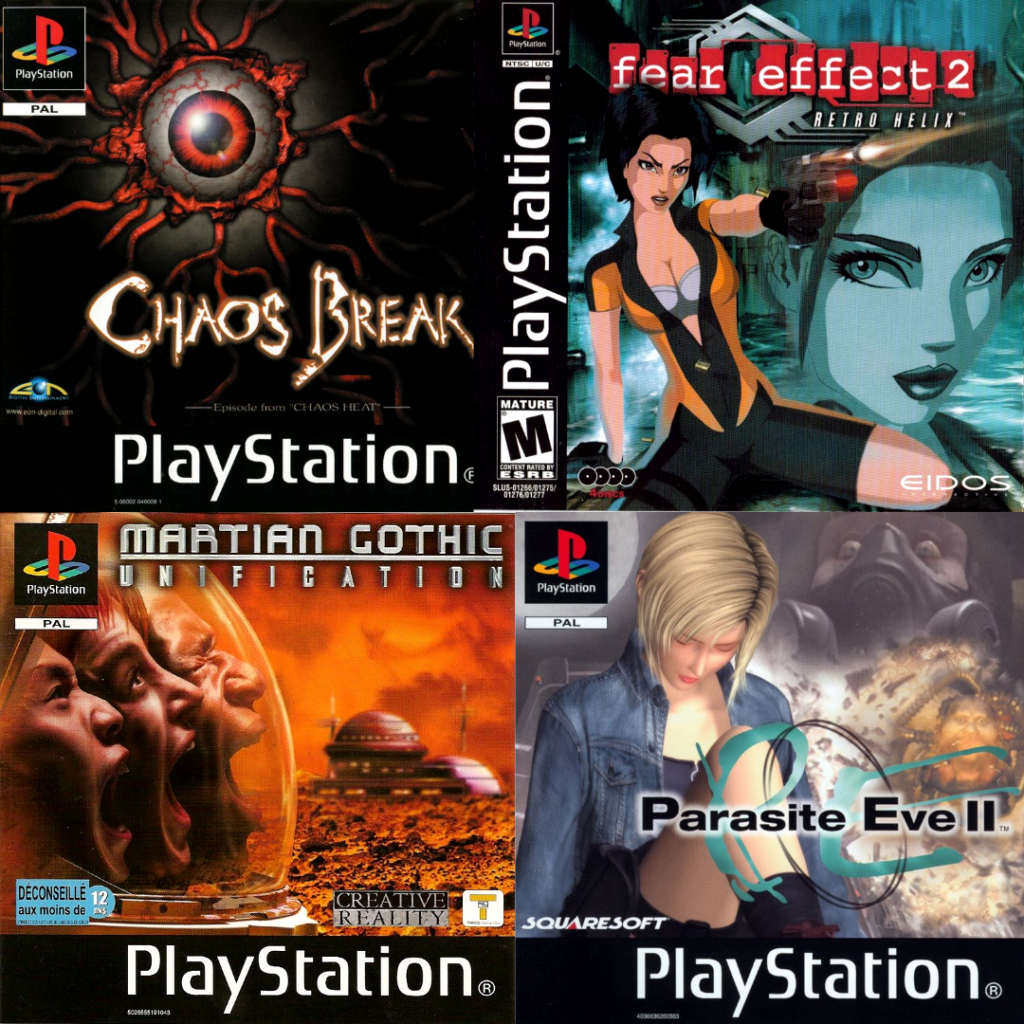
Chaos Break is a survival horror title that blends Resident Evil-style exploration with faster-paced shooting, placing players inside a virus-ravaged research facility overrun by grotesque mutants. While the fixed camera angles and tank controls feel familiar, the game emphasizes combat more heavily, offering a satisfying variety of weapons and intense encounters. The environments are atmospheric despite their repetitive industrial design, and the creature designs deliver plenty of unsettling moments. Voice acting and story presentation are modest, but the cooperative-style interactions between the two protagonists add some charm. Although it never reaches the polish of Capcom’s classics, Chaos Break remains an enjoyable hidden gem for fans looking for another late-generation PlayStation horror adventure.
Fear Effect 2: Retro Helix
Fear Effect 2: Retro Helix is an ambitious prequel that expands on its predecessor with a compelling cyberpunk narrative infused with supernatural mythology. Players switch between multiple protagonists, solving environmental puzzles, engaging in tense gunfights, and uncovering a story filled with conspiracies and ancient Chinese legends. The game’s pre-rendered streaming video backgrounds remain visually impressive, creating cinematic environments unlike anything else on the PlayStation. Controls can occasionally feel stiff, but the varied gameplay and memorable cast keep the experience engaging throughout. Combined with its haunting soundtrack and stylish presentation, Fear Effect 2 stands as one of the console’s most distinctive action-adventure games.
Parasite Eve 2
Parasite Eve 2 shifts away from the RPG mechanics of the original in favor of a more traditional survival horror formula while retaining its unique blend of biological horror and supernatural abilities. As FBI agent Aya Brea, players investigate horrifying mutant outbreaks across eerie towns, laboratories, and underground facilities. Real-time combat, customizable weapons, and Parasite Energy powers create satisfying tactical encounters, while resource management keeps the tension consistently high. Excellent CGI cinematics, detailed character models, and an atmospheric soundtrack help elevate the cinematic experience. Although fans of the first game’s RPG systems were divided by the changes, Parasite Eve 2 remains one of the PlayStation’s finest horror adventures thanks to its polished gameplay and memorable atmosphere.
Martian Gothic: Unification
Martian Gothic: Unification offers a unique take on survival horror by forcing players to control three separate characters exploring an abandoned Mars research base while following one crucial rule: never let them come into physical contact. This mechanic creates inventive puzzle-solving that requires careful planning, item sharing, and switching between perspectives. The eerie Martian setting, unsettling audio design, and dark sense of humor give the game a distinctive identity, even if awkward controls and occasionally cryptic puzzles can become frustrating. Combat is intentionally limited, placing greater emphasis on survival and exploration than action. Despite its rough edges, Martian Gothic delivers an original and rewarding experience for players willing to embrace its unconventional design.
——————————————–
Chaos Break Released in the twilight of the PlayStation era, Chaos Break feels like Taito’s direct, action-heavy answer to Dino Crisis and Resident Evil. Set in an isolated biochemical research facility overrun by mutated organisms, the game lets you choose between two playable operatives—Rick and Mituki—each offering slightly different combat styles. While its B-movie story and stiff voice acting fall well within classic survival horror tropes, the gameplay leans far more into real-time arcade action than slow-burn suspense. Unforgiving camera angles and rigid controls can make combat clunky, but its fast-paced encounters, atmospheric industrial environments, and nostalgic late-90s charm make it a compelling hidden gem for hardcore retro horror fans.
Fear Effect 2: Retro Helix Serving as a sleek cyberpunk prequel to the original, Fear Effect 2: Retro Helix expands on its predecessor’s distinctive cell-shaded aesthetic and tense cinematic atmosphere. Set in 2048, the narrative follows Hana, Rain, Deke, and Glas as they investigate a deadly global pandemic, weaving together futuristic conspiracy and ancient Chinese mythology. The game polishes the series’ signature fixed-camera gameplay, blending survival horror inventory management with trigger-happy gunfights and intricate inventory puzzles. Though the static camera angles and unforgiving health system still demand precise execution, Retro Helix stands out as one of the PS1’s visually ambitious and mature action-adventure titles.
Parasite Eve II Shifting away from the semi-turn-based active time battle mechanics of the original, Parasite Eve II pivots protagonist Aya Brea into a gameplay style much closer to traditional survival horror. Set several years after the New York incident, Aya tracks Neo-M I.T.O. outbreaks from Los Angeles to the eerie desert town of Dryfield and a secret underground bunker. The game seamlessly combines real-time gunplay and positioning with Aya’s upgradeable “Parasite Energy” spells, offering a versatile tactical blend of sci-fi magic and realistic firearms. With gorgeous prerendered backdrops, deep RPG light mechanics, and an engrossing conspiracy plot, it remains one of Square’s most memorable experiments on the hardware.
Martian Gothic: Unification Martian Gothic: Unification brings survival horror to the Red Planet, dropping a three-person research crew onto a silent, infected Martian base named Vita-1. Its defining gimmick is both its greatest innovation and its steepest hurdle: the crew members must explore the base independently because if any two meet, they fuse into a grotesque “Trimorph” mutant, resulting in an instant game over. Players must juggle three distinct inventories, passing items between airlocks and vacuum tubes to solve complex, back-and-forth puzzles. Driven by dense text logs, high difficulty, and a genuinely unsettling isolation, it is a demanding, slow-burn thriller that rewards patient puzzle lovers who don’t mind punishing design.
——————————————–
Chaos Break:
Chaos Break is the kind of late life PS1 survival horror that feels like it was built from spare Resident Evil parts and pure ambition. Set in a claustrophobic bio lab overrun with parasitic horrors, it leans hard into isolation, resource management, and genuinely grotesque creature design. The tank controls are stiff and the voice acting is rough even by PS1 standards, but the atmosphere is thick, the labyrinthine level design rewards backtracking, and the story is more coherent than it has any right to be. It’s flawed, clunky, and obscure for a reason, but for horror completists it’s a legit hidden gem.
Fear Effect 2 Retro Helix:
Fear Effect 2 Retro Helix is stylish, horny, and completely unhinged in the best way. A prequel that trades the first game’s Hollywood blockbuster vibe for something more intimate and weird, it follows Hana, Rain and Deke through a cyberpunk dystopia painted with cel shaded characters over looping full motion video backgrounds. The puzzles are often obtuse and the tank controls will fight you, but the presentation is still unmatched on PS1, the lesbian romance at its core was shockingly earnest for 2001, and the fear meter that replaces a traditional health bar keeps tension high. It’s short, flawed, and ends on a brutal cliffhanger, but nothing else on the system looks or feels like it.
Parasite Eve 2:
Parasite Eve 2 ditches the first game’s unique RPG blend to become a full blown survival horror game, and while purists were divided, it absolutely works. Aya Brea is back, older and more hardened, hunting rogue NMCs across the American desert, and Square brings its big budget polish to every pre rendered backdrop and cinematic set piece. Combat is slower and more deliberate than the original, with real time gunplay, limited ammo, and a great magic system tied to parasite powers. It’s easier and more linear than Resident Evil, with some awkward localization, but the production values, creature design, and Aya herself make it one of the most playable and replayable horror games on PS1.
Martian Gothic Unification:
Martian Gothic Unification wants so badly to be a thinking man’s survival horror, and you have to respect the swing. Three astronauts separated on a dead Martian base, you constantly switch between them, have them investigate different zones, and are forbidden from meeting up or the game kills you. The idea is brilliant and the British sci fi horror vibe is genuinely creepy, all lonely corridors, deadpan logs, and cosmic dread. In practice, it’s brutally slow, dialogue heavy, backtrack heavy, and the empty base can feel truly empty in the wrong way. It’s not fun in the traditional sense, but if you have patience for its anti social puzzle structure and bleak atmosphere, it’s one of the most unique and unsettling games on the system.
——————————————–
Chaos Break
A bizarre hybrid of survival horror and isometric action, Chaos Break drops you into a secret European lab overrun by grotesque mutants, but its clunky tank controls, frustrating camera angles, and repetitive corridor-crawling quickly turn tension into tedium. The weapon-crafting system offers a glimmer of depth, and the eerie FMV cutscenes have that charmingly janky late-’90s charm, but the sluggish combat and cheap enemy placement make every encounter a chore rather than a thrill. It’s a cult curiosity for horror completists, but most players will find its broken difficulty and dated design more punishing than atmospheric.
Fear Effect 2: Retro Helix
This prequel doubles down on the original’s cinematic flair, delivering a cyberpunk-noir romp through Hong Kong’s underworld with three mercenaries chasing a mystical artifact, but it’s the game’s sheer style—cell-shaded visuals, pulse-pounding soundtrack, and ludicrously over-the-top action sequences—that carries it through its clunky, fixed-camera combat and trial-and-error stealth sections. The puzzle design is often obtuse, and the tank controls haven’t aged well, but the branching dialogue, risque tone, and relentless set pieces keep the adrenaline pumping even when you’re wrestling with the interface. It’s a flawed, feverish gem that rewards patience with one of the PS1’s most audacious action-adventure experiences.
Parasite Eve 2
Trading the first game’s RPG-heavy hybrid for a more survival-horror focus, Parasite Eve 2 follows Aya Brea through a desert town and a secret facility, blending Resident Evil-style exploration with a real-time battle system that feels clunkier and less strategic than its predecessor. The mitochondria-fueled magic and weapon upgrades are still satisfying, but the linear progression, sparse save points, and backtracking-heavy design often frustrate, while the B-movie plot and stiff voice acting lack the original’s eerie sci-fi gravitas. Still, its atmospheric locales, grotesque mutant designs, and multiple endings offer enough creepy charm for fans, even if it’s a step down from the genre-defining original.
Martian Gothic: Unification
A slow-burn survival horror set on a desolate Mars base, this game splits its action between three characters who must swap items and solve puzzles across interconnected zones, but the agonizingly slow movement, static camera angles, and obtuse, switch-hunting riddles make progress feel like wading through quicksand. The combat is a clumsy first-person affair with scant ammo and clunky melee, yet the game’s stark, lonely atmosphere and cleverly interconnected map design do evoke a genuine sense of isolation and dread. It’s a deeply flawed, punishing experience that requires a guide and saintlike patience, but for those who crave old-school, slow-paced puzzling over action, it offers a uniquely desolate sci-fi nightmare.