Fire Emblem Awakening
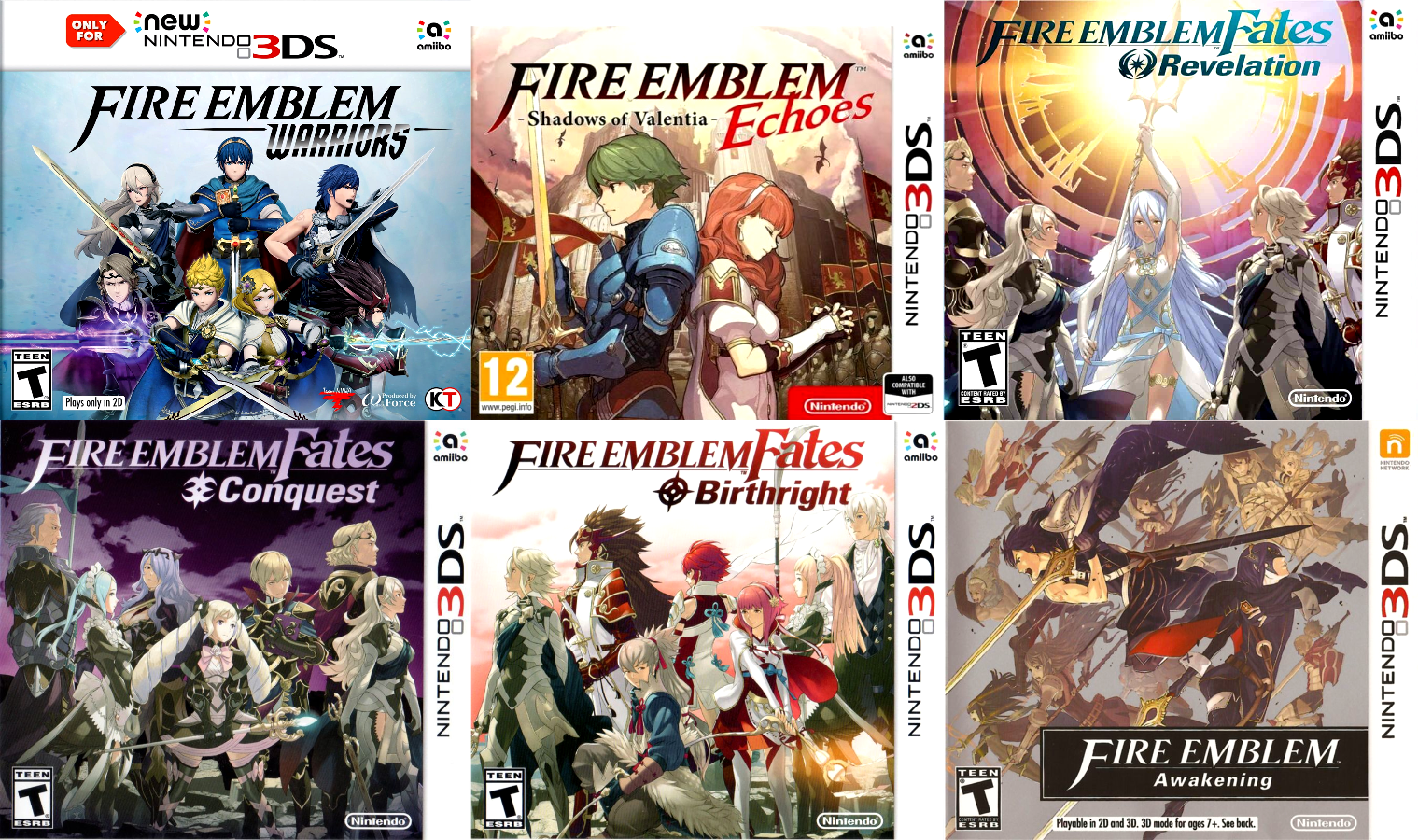
Fire Emblem Awakening is one of the most accessible and influential entries in the series, combining the traditional tactical combat of Fire Emblem with a much greater emphasis on character relationships, marriage, and customization. Its story has a strong sense of adventure and features an appealing cast, while the time-travel premise gives the narrative some memorable twists. The ability to pair units together and develop their children into future soldiers adds an addictive layer of experimentation, although it can also make the game extremely easy to break, particularly on lower difficulties. The maps are not always as thoughtfully designed as those in the best older entries, and the story occasionally leans too heavily on melodrama, but Awakening remains an excellent introduction to the franchise and a defining 3DS RPG. It is particularly impressive considering it was originally conceived as potentially being the final Fire Emblem game.
Fire Emblem Fates: Birthright
Fire Emblem Fates: Birthright is the most approachable of the three Fates campaigns, essentially serving as the natural follow-up to Awakening for players who enjoy character customization, relationship mechanics, and relatively straightforward progression. Its central conflict is built around choosing Hoshido, the protagonist’s birth kingdom, and the campaign provides a large cast of likable characters alongside plenty of opportunities to experiment with classes and unit pairings. Unfortunately, the story struggles with the moral implications of its central choice, often making the supposedly difficult decision feel less convincing than it should. The maps and objectives are generally more forgiving than those in Conquest, making Birthright a good entry point for newcomers, but experienced players may find it lacking in strategic challenge. As a complete package, it is enjoyable and polished, though its greatest strength is probably how comfortably it introduces players to Fates’ mechanics rather than how compelling its narrative is.
Fire Emblem Fates: Conquest
Fire Emblem Fates: Conquest is arguably the strongest Fates campaign from a pure gameplay perspective, offering considerably more demanding maps and objectives than Birthright. Instead of simply overwhelming enemies with powerful units, players are frequently encouraged to think carefully about positioning, terrain, enemy abilities, and special map conditions. The result is some of the most intricate tactical gameplay available on the 3DS, and higher difficulties can provide a serious challenge even for experienced Fire Emblem players. The major weakness is its story, which struggles to make Corrin’s decision to side with Nohr feel convincing and frequently sacrifices character logic for dramatic developments. Nevertheless, the excellent map design and satisfying tactical depth make Conquest a standout for players who prioritize strategy above all else. If you want the Fates campaign that best demonstrates what the series can do mechanically, Conquest is the clear choice.
Fire Emblem Fates: Revelation
Fire Emblem Fates: Revelation functions as the third route of Fates, allowing Corrin to reject the conflict between Hoshido and Nohr and eventually bring characters from both sides together. Its greatest appeal is undoubtedly the opportunity to use an enormous combined roster, making it a fascinating playground for experimenting with classes, relationships, and unusual team compositions. It also provides additional context for the overarching Fates story and answers questions that remain unresolved in Birthright and Conquest. Unfortunately, the gameplay design is considerably less focused than Conquest’s, with some maps built around gimmicks that can become frustrating rather than interesting. The narrative likewise has its share of contrivances, and the route works best when viewed as an expansion that completes the Fates experience rather than as the strongest standalone campaign. For players invested in the characters and world of Fates, however, Revelation provides an enjoyable opportunity to see its divided cast finally cooperate.
Fire Emblem Echoes: Shadows of Valentia
Fire Emblem Echoes: Shadows of Valentia is perhaps the most distinctive of the 3DS Fire Emblem games, being a lavish remake of the 1992 Famicom title Fire Emblem Gaiden. Its two-protagonist structure, Alm and Celica, gives the story an unusually strong focus, while full voice acting, beautiful artwork, memorable music, and a more character-driven presentation make Valentia feel remarkably atmospheric. The combat system deliberately retains several unusual ideas from the original, including open areas, limited weapon durability concerns, dungeon exploration, and some unconventional map designs. Those quirks can make the game feel less refined strategically than Awakening or Fates, particularly when compared with Conquest’s carefully constructed battlefields, but they also give Echoes an identity of its own. The result is a charming, beautifully presented RPG that places greater emphasis on atmosphere and storytelling than on endlessly optimizing tactical encounters.
Fire Emblem Warriors
Fire Emblem Warriors is the odd one out because it is a Musou-style action game rather than a traditional turn-based tactical RPG, and its Nintendo 3DS release was specifically for the New Nintendo 3DS family. Instead of carefully moving a small army across a grid, you directly control characters such as Chrom, Marth, Corrin, Robin, and Lucina as they cut through enormous numbers of enemies in real time. The combat is fast, flashy, and satisfying, while the ability to switch between characters and issue commands to allies gives the action a welcome strategic layer. Its story is relatively lightweight and functions mainly as an excuse to bring together characters from several Fire Emblem games, and the roster is notably weighted toward Awakening and Fates. Nevertheless, as a crossover action game it is a surprisingly good fit for the franchise, particularly for fans who enjoy seeing familiar characters translated into spectacular real-time combat.
———————————————
Fire Emblem Awakening (2012) Credited with single-handedly saving the franchise from cancellation, Fire Emblem Awakening refined the classic tactical RPG formula into an accessible, highly addictive package. Set in the continents of Ylisse and Valm, the game follows Chrom and his customizable Avatar, Robin, as they navigate political conflict, undead threats, and a time-traveling narrative involving their future children. The game introduced the modern Casual Mode—which removes permanent character death—and refined the Pair-Up system, allowing adjacent units to boost stats and execute dual attacks. Combined with deep class customization, rich character support conversations, and vibrant presentation, Awakening remains the gold standard entry point for modern tactical strategy fans.
Fire Emblem Fates: Birthright (2015) As one-third of the ambitious Fates generation, Birthright offers the most traditional and accessible experience of the trio. You play as Corrin, a royal forced to choose between your biological family in the Japanese-inspired Kingdom of Hoshido or your adoptive family in Nohr. Choosing Birthright aligns you with Hoshido, delivering a story focused on defending your ancestral homeland alongside a roster of Eastern-themed classes like Ninja, Samurai, and Kinshi Knights. The gameplay mirrors Awakening with open-map grinding opportunities, straightforward win conditions, and forgiving objective designs, making it ideal for players who prefer character progression and flexible difficulty over grueling tactical puzzles.
Fire Emblem Fates: Conquest (2015) Designed specifically for series veterans seeking a classic challenge, Conquest forces Corrin to stay with the European-style Kingdom of Nohr to reform the corrupt empire from within. Stripping away the ability to grind for experience and gold between story chapters, Conquest places a heavy emphasis on strict resource management and tight, meticulous unit positioning. The map designs are among the best in the entire franchise, constantly throwing complex objective constraints—such as strict turn limits, escape scenarios, dragon vein environmental traps, and defense points—at the player. It trades a somewhat clunky narrative for incredible tactical depth, offering one of the most rewarding strategic experiences on the platform.
Fire Emblem Fates: Revelation (2015) Originally released as a DLC campaign requiring either base game, Revelation serves as the definitive third branch where Corrin refuses to choose either side, seeking instead to unite Hoshido and Nohr against a shadow kingdom manipulating the war. Gameplay-wise, it acts as a sandbox hybrid: it reinstates map grinding and flexibility while granting access to almost the entire character cast from both Birthright and Conquest. While it offers unmatched unit pairing possibilities and class experimentation, the main campaign relies heavily on gimmick-driven map mechanics—such as clearing snow tiles or moving platform puzzles—that can occasionally slow down the tactical pacing.
Fire Emblem Echoes: Shadows of Valentia (2017) A top-to-bottom remake of 1992’s Famicom title Fire Emblem Gaiden, Shadows of Valentia stands apart from its 3DS siblings by heavily altering established series conventions. The dual-protagonist narrative alternates between childhood friends Alm and Celica as they fight on opposing fronts across the continent of Valentia. It ditches the weapon triangle, Pair-Up system, and complex marriage mechanics in favor of full English voice acting, 3D dungeon exploration, simplified inventory systems, and spellcasting that costs hit points. Although the faithful map layouts retain some of the original NES version’s open, barren terrain, its astounding audiovisual presentation, cinematic story delivery, and rewind mechanic make it a memorable swansong for the handheld.
Fire Emblem Warriors (2017) A crossover spin-off developed by Omega Force, Fire Emblem Warriors merges the franchise’s character roster with fast-paced, action-heavy hack-and-slash gameplay. Rather than turn-based combat, players directly control heroes—primarily drawn from Awakening, Fates, and Shadow Dragon—mowing down thousands of enemy troops on sprawling battlefields. Despite the shift in genre, it successfully integrates signature Fire Emblem elements, including the weapon triangle, tactical map orders, character support conversations, and real-time unit switching. It delivers a fun, fan-service-filled action detour, though note that the 3DS version was built exclusively as a New Nintendo 3DS hardware title.
———————————————
Fire Emblem Awakening (2012): The game that saved the franchise and for good reason – it’s a perfect gateway. Awakening nails the balance between classic permadeath strategy and modern accessibility with Casual Mode, Pair Up mechanics, and deep relationship/support conversations that let you marry off your army. The story about Chrom, Robin, and Lucina fighting to change a doomed future starts strong and gets a little messy in the second half, but the characters are incredibly charming and the map design is fun if a bit simple. It’s fast, addictive, and endlessly replayable.
Fire Emblem Fates: Birthright (2015): Built for newcomers, Birthright is the most straightforward and forgiving of the Fates trilogy. You side with your birth family in Hoshido, leading to a classic, honorable tale of good vs. evil with brighter maps, weaker enemies, and the freedom to grind gold and EXP on extra battles outside the main story. The gameplay is polished and satisfying thanks to the new My Castle and refined Pair Up, but the story is predictable and lacks teeth. Think of it as Awakening’s comfortable sequel.
Fire Emblem Fates: Conquest (2015): The hardcore strategist’s choice. Siding with your adopted family in Nohr, Conquest strips away grinding and throws you into 26 brilliantly designed, brutal chapters with gimmicky objectives, limited money, and punishing enemy placement. It has by far the best map design on the 3DS, forcing you to think creatively every turn. The trade-off is a story that makes almost no sense and forces your heroic character to do terrible things for loyalty. If you play for gameplay over plot, this is the peak of 3DS Fire Emblem.
Fire Emblem Fates: Revelation (2015): The third path that was supposed to fix everything and ends up being a fan-service compromise. Revelation has you reject both families to forge a path of peace and recruit everyone from both Birthright and Conquest, which is great for the ultimate roster but terrible for balance and plot coherence. The story bends over backwards to justify its existence and the map design is wildly uneven, mixing some of the best and worst ideas from the other two games. It’s essential only if you’re already invested and want all the supports and the true ending.
Fire Emblem Echoes: Shadows of Valentia (2017): A gorgeous, faithful remake of the 1990 Famicom game Fire Emblem Gaiden and the black sheep of the 3DS era. Echoes ditches weapon triangles and focuses on a challenging, old-school loop with full dungeon crawling, third-person exploration, and a grim two-army story following Alm and Celica. The presentation is top-tier for the 3DS with full voice acting, beautiful art from Hidari, and an incredible soundtrack, but the map design is intentionally archaic and repetitive. It’s less about deep strategy and more about atmosphere and storytelling, and it pulls that off beautifully.
———————————————
Fire Emblem Awakening is the game that saved the franchise, and it’s easy to see why with its compelling cast, time-traveling narrative, and the innovative marriage and child unit mechanics that encourage deep strategic pairing. The introduction of Casual Mode made the series more accessible without sacrificing the classic, high-stakes gameplay fans loved, while the relationship system added a layer of personal investment that made each playthrough feel unique. Although some purists felt the map design and story leaned into anime tropes, the sheer charm and polish of Awakening made it a defining entry and a beloved classic on the 3DS.
Fire Emblem Fates took the bold step of splitting its narrative into three distinct, full-length paths: Birthright, Conquest, and the DLC route Revelation. This ambitious concept yielded mixed results; Conquest is widely praised for its challenging, intricate map design and engaging tactical gameplay, while Birthright offers a more traditional, grind-friendly experience. The story, however, is a point of major contention, with many criticizing its convoluted plot and divisive characters, even as others found emotional depth in its themes of family and choice. Regardless, Fates is a mechanically excellent and content-rich trilogy that pushed the 3DS hardware to its limits.
Fire Emblem Echoes: Shadows of Valentia is a beautiful and faithful remake of the NES classic Gaiden, offering a striking visual style and a fully voice-acted, more grounded story that follows dual protagonists Alm and Celica on their separate journeys. The game is a deliberate departure from its predecessors, implementing unique mechanics like dungeon exploration, a world map with skirmishes, and a streamlined class system that provides a distinct flavor. While its old-school map design and slow-paced dungeon segments have received criticism, the game’s narrative ambition, stunning presentation, and excellent character work make it a unique and memorable swan song for the series on the 3DS.
Fire Emblem Awakening
Fire Emblem Awakening is one of the most accessible and influential entries in the series, combining the traditional tactical combat of Fire Emblem with a much greater emphasis on character relationships, marriage, and customization. Its story has a strong sense of adventure and features an appealing cast, while the time-travel premise gives the narrative some memorable twists. The ability to pair units together and develop their children into future soldiers adds an addictive layer of experimentation, although it can also make the game extremely easy to break, particularly on lower difficulties. The maps are not always as thoughtfully designed as those in the best older entries, and the story occasionally leans too heavily on melodrama, but Awakening remains an excellent introduction to the franchise and a defining 3DS RPG. It is particularly impressive considering it was originally conceived as potentially being the final Fire Emblem game.
Fire Emblem Fates: Birthright
Fire Emblem Fates: Birthright is the most approachable of the three Fates campaigns, essentially serving as the natural follow-up to Awakening for players who enjoy character customization, relationship mechanics, and relatively straightforward progression. Its central conflict is built around choosing Hoshido, the protagonist’s birth kingdom, and the campaign provides a large cast of likable characters alongside plenty of opportunities to experiment with classes and unit pairings. Unfortunately, the story struggles with the moral implications of its central choice, often making the supposedly difficult decision feel less convincing than it should. The maps and objectives are generally more forgiving than those in Conquest, making Birthright a good entry point for newcomers, but experienced players may find it lacking in strategic challenge. As a complete package, it is enjoyable and polished, though its greatest strength is probably how comfortably it introduces players to Fates’ mechanics rather than how compelling its narrative is.
Fire Emblem Fates: Conquest
Fire Emblem Fates: Conquest is arguably the strongest Fates campaign from a pure gameplay perspective, offering considerably more demanding maps and objectives than Birthright. Instead of simply overwhelming enemies with powerful units, players are frequently encouraged to think carefully about positioning, terrain, enemy abilities, and special map conditions. The result is some of the most intricate tactical gameplay available on the 3DS, and higher difficulties can provide a serious challenge even for experienced Fire Emblem players. The major weakness is its story, which struggles to make Corrin’s decision to side with Nohr feel convincing and frequently sacrifices character logic for dramatic developments. Nevertheless, the excellent map design and satisfying tactical depth make Conquest a standout for players who prioritize strategy above all else. If you want the Fates campaign that best demonstrates what the series can do mechanically, Conquest is the clear choice.
Fire Emblem Fates: Revelation
Fire Emblem Fates: Revelation functions as the third route of Fates, allowing Corrin to reject the conflict between Hoshido and Nohr and eventually bring characters from both sides together. Its greatest appeal is undoubtedly the opportunity to use an enormous combined roster, making it a fascinating playground for experimenting with classes, relationships, and unusual team compositions. It also provides additional context for the overarching Fates story and answers questions that remain unresolved in Birthright and Conquest. Unfortunately, the gameplay design is considerably less focused than Conquest’s, with some maps built around gimmicks that can become frustrating rather than interesting. The narrative likewise has its share of contrivances, and the route works best when viewed as an expansion that completes the Fates experience rather than as the strongest standalone campaign. For players invested in the characters and world of Fates, however, Revelation provides an enjoyable opportunity to see its divided cast finally cooperate.
Fire Emblem Echoes: Shadows of Valentia
Fire Emblem Echoes: Shadows of Valentia is perhaps the most distinctive of the 3DS Fire Emblem games, being a lavish remake of the 1992 Famicom title Fire Emblem Gaiden. Its two-protagonist structure, Alm and Celica, gives the story an unusually strong focus, while full voice acting, beautiful artwork, memorable music, and a more character-driven presentation make Valentia feel remarkably atmospheric. The combat system deliberately retains several unusual ideas from the original, including open areas, limited weapon durability concerns, dungeon exploration, and some unconventional map designs. Those quirks can make the game feel less refined strategically than Awakening or Fates, particularly when compared with Conquest’s carefully constructed battlefields, but they also give Echoes an identity of its own. The result is a charming, beautifully presented RPG that places greater emphasis on atmosphere and storytelling than on endlessly optimizing tactical encounters.
Fire Emblem Warriors
Fire Emblem Warriors is the odd one out because it is a Musou-style action game rather than a traditional turn-based tactical RPG, and its Nintendo 3DS release was specifically for the New Nintendo 3DS family. Instead of carefully moving a small army across a grid, you directly control characters such as Chrom, Marth, Corrin, Robin, and Lucina as they cut through enormous numbers of enemies in real time. The combat is fast, flashy, and satisfying, while the ability to switch between characters and issue commands to allies gives the action a welcome strategic layer. Its story is relatively lightweight and functions mainly as an excuse to bring together characters from several Fire Emblem games, and the roster is notably weighted toward Awakening and Fates. Nevertheless, as a crossover action game it is a surprisingly good fit for the franchise, particularly for fans who enjoy seeing familiar characters translated into spectacular real-time combat.
———————————————
Fire Emblem Awakening (2012) Credited with single-handedly saving the franchise from cancellation, Fire Emblem Awakening refined the classic tactical RPG formula into an accessible, highly addictive package. Set in the continents of Ylisse and Valm, the game follows Chrom and his customizable Avatar, Robin, as they navigate political conflict, undead threats, and a time-traveling narrative involving their future children. The game introduced the modern Casual Mode—which removes permanent character death—and refined the Pair-Up system, allowing adjacent units to boost stats and execute dual attacks. Combined with deep class customization, rich character support conversations, and vibrant presentation, Awakening remains the gold standard entry point for modern tactical strategy fans.
Fire Emblem Fates: Birthright (2015) As one-third of the ambitious Fates generation, Birthright offers the most traditional and accessible experience of the trio. You play as Corrin, a royal forced to choose between your biological family in the Japanese-inspired Kingdom of Hoshido or your adoptive family in Nohr. Choosing Birthright aligns you with Hoshido, delivering a story focused on defending your ancestral homeland alongside a roster of Eastern-themed classes like Ninja, Samurai, and Kinshi Knights. The gameplay mirrors Awakening with open-map grinding opportunities, straightforward win conditions, and forgiving objective designs, making it ideal for players who prefer character progression and flexible difficulty over grueling tactical puzzles.
Fire Emblem Fates: Conquest (2015) Designed specifically for series veterans seeking a classic challenge, Conquest forces Corrin to stay with the European-style Kingdom of Nohr to reform the corrupt empire from within. Stripping away the ability to grind for experience and gold between story chapters, Conquest places a heavy emphasis on strict resource management and tight, meticulous unit positioning. The map designs are among the best in the entire franchise, constantly throwing complex objective constraints—such as strict turn limits, escape scenarios, dragon vein environmental traps, and defense points—at the player. It trades a somewhat clunky narrative for incredible tactical depth, offering one of the most rewarding strategic experiences on the platform.
Fire Emblem Fates: Revelation (2015) Originally released as a DLC campaign requiring either base game, Revelation serves as the definitive third branch where Corrin refuses to choose either side, seeking instead to unite Hoshido and Nohr against a shadow kingdom manipulating the war. Gameplay-wise, it acts as a sandbox hybrid: it reinstates map grinding and flexibility while granting access to almost the entire character cast from both Birthright and Conquest. While it offers unmatched unit pairing possibilities and class experimentation, the main campaign relies heavily on gimmick-driven map mechanics—such as clearing snow tiles or moving platform puzzles—that can occasionally slow down the tactical pacing.
Fire Emblem Echoes: Shadows of Valentia (2017) A top-to-bottom remake of 1992’s Famicom title Fire Emblem Gaiden, Shadows of Valentia stands apart from its 3DS siblings by heavily altering established series conventions. The dual-protagonist narrative alternates between childhood friends Alm and Celica as they fight on opposing fronts across the continent of Valentia. It ditches the weapon triangle, Pair-Up system, and complex marriage mechanics in favor of full English voice acting, 3D dungeon exploration, simplified inventory systems, and spellcasting that costs hit points. Although the faithful map layouts retain some of the original NES version’s open, barren terrain, its astounding audiovisual presentation, cinematic story delivery, and rewind mechanic make it a memorable swansong for the handheld.
Fire Emblem Warriors (2017) A crossover spin-off developed by Omega Force, Fire Emblem Warriors merges the franchise’s character roster with fast-paced, action-heavy hack-and-slash gameplay. Rather than turn-based combat, players directly control heroes—primarily drawn from Awakening, Fates, and Shadow Dragon—mowing down thousands of enemy troops on sprawling battlefields. Despite the shift in genre, it successfully integrates signature Fire Emblem elements, including the weapon triangle, tactical map orders, character support conversations, and real-time unit switching. It delivers a fun, fan-service-filled action detour, though note that the 3DS version was built exclusively as a New Nintendo 3DS hardware title.
———————————————
Fire Emblem Awakening (2012): The game that saved the franchise and for good reason – it’s a perfect gateway. Awakening nails the balance between classic permadeath strategy and modern accessibility with Casual Mode, Pair Up mechanics, and deep relationship/support conversations that let you marry off your army. The story about Chrom, Robin, and Lucina fighting to change a doomed future starts strong and gets a little messy in the second half, but the characters are incredibly charming and the map design is fun if a bit simple. It’s fast, addictive, and endlessly replayable.
Fire Emblem Fates: Birthright (2015): Built for newcomers, Birthright is the most straightforward and forgiving of the Fates trilogy. You side with your birth family in Hoshido, leading to a classic, honorable tale of good vs. evil with brighter maps, weaker enemies, and the freedom to grind gold and EXP on extra battles outside the main story. The gameplay is polished and satisfying thanks to the new My Castle and refined Pair Up, but the story is predictable and lacks teeth. Think of it as Awakening’s comfortable sequel.
Fire Emblem Fates: Conquest (2015): The hardcore strategist’s choice. Siding with your adopted family in Nohr, Conquest strips away grinding and throws you into 26 brilliantly designed, brutal chapters with gimmicky objectives, limited money, and punishing enemy placement. It has by far the best map design on the 3DS, forcing you to think creatively every turn. The trade-off is a story that makes almost no sense and forces your heroic character to do terrible things for loyalty. If you play for gameplay over plot, this is the peak of 3DS Fire Emblem.
Fire Emblem Fates: Revelation (2015): The third path that was supposed to fix everything and ends up being a fan-service compromise. Revelation has you reject both families to forge a path of peace and recruit everyone from both Birthright and Conquest, which is great for the ultimate roster but terrible for balance and plot coherence. The story bends over backwards to justify its existence and the map design is wildly uneven, mixing some of the best and worst ideas from the other two games. It’s essential only if you’re already invested and want all the supports and the true ending.
Fire Emblem Echoes: Shadows of Valentia (2017): A gorgeous, faithful remake of the 1990 Famicom game Fire Emblem Gaiden and the black sheep of the 3DS era. Echoes ditches weapon triangles and focuses on a challenging, old-school loop with full dungeon crawling, third-person exploration, and a grim two-army story following Alm and Celica. The presentation is top-tier for the 3DS with full voice acting, beautiful art from Hidari, and an incredible soundtrack, but the map design is intentionally archaic and repetitive. It’s less about deep strategy and more about atmosphere and storytelling, and it pulls that off beautifully.
———————————————
Fire Emblem Awakening is the game that saved the franchise, and it’s easy to see why with its compelling cast, time-traveling narrative, and the innovative marriage and child unit mechanics that encourage deep strategic pairing. The introduction of Casual Mode made the series more accessible without sacrificing the classic, high-stakes gameplay fans loved, while the relationship system added a layer of personal investment that made each playthrough feel unique. Although some purists felt the map design and story leaned into anime tropes, the sheer charm and polish of Awakening made it a defining entry and a beloved classic on the 3DS.
Fire Emblem Fates took the bold step of splitting its narrative into three distinct, full-length paths: Birthright, Conquest, and the DLC route Revelation. This ambitious concept yielded mixed results; Conquest is widely praised for its challenging, intricate map design and engaging tactical gameplay, while Birthright offers a more traditional, grind-friendly experience. The story, however, is a point of major contention, with many criticizing its convoluted plot and divisive characters, even as others found emotional depth in its themes of family and choice. Regardless, Fates is a mechanically excellent and content-rich trilogy that pushed the 3DS hardware to its limits.
Fire Emblem Echoes: Shadows of Valentia is a beautiful and faithful remake of the NES classic Gaiden, offering a striking visual style and a fully voice-acted, more grounded story that follows dual protagonists Alm and Celica on their separate journeys. The game is a deliberate departure from its predecessors, implementing unique mechanics like dungeon exploration, a world map with skirmishes, and a streamlined class system that provides a distinct flavor. While its old-school map design and slow-paced dungeon segments have received criticism, the game’s narrative ambition, stunning presentation, and excellent character work make it a unique and memorable swan song for the series on the 3DS.
Fire Emblem Warriors is an action-packed spin-off developed in collaboration with Koei Tecmo, blending the strategic elements of the Fire Emblem series with the hack-and-slash gameplay of the Warriors franchise. Available on both the Nintendo Switch and New Nintendo 3DS, the game lets players control iconic heroes from across the series, mowing down hordes of enemies in fast-paced, exhilarating combat while experiencing an original story featuring twin royal siblings. While its gameplay is a significant departure from the mainline tactical RPGs, it offers a fun and fan-service-filled celebration of the franchise’s rich history.