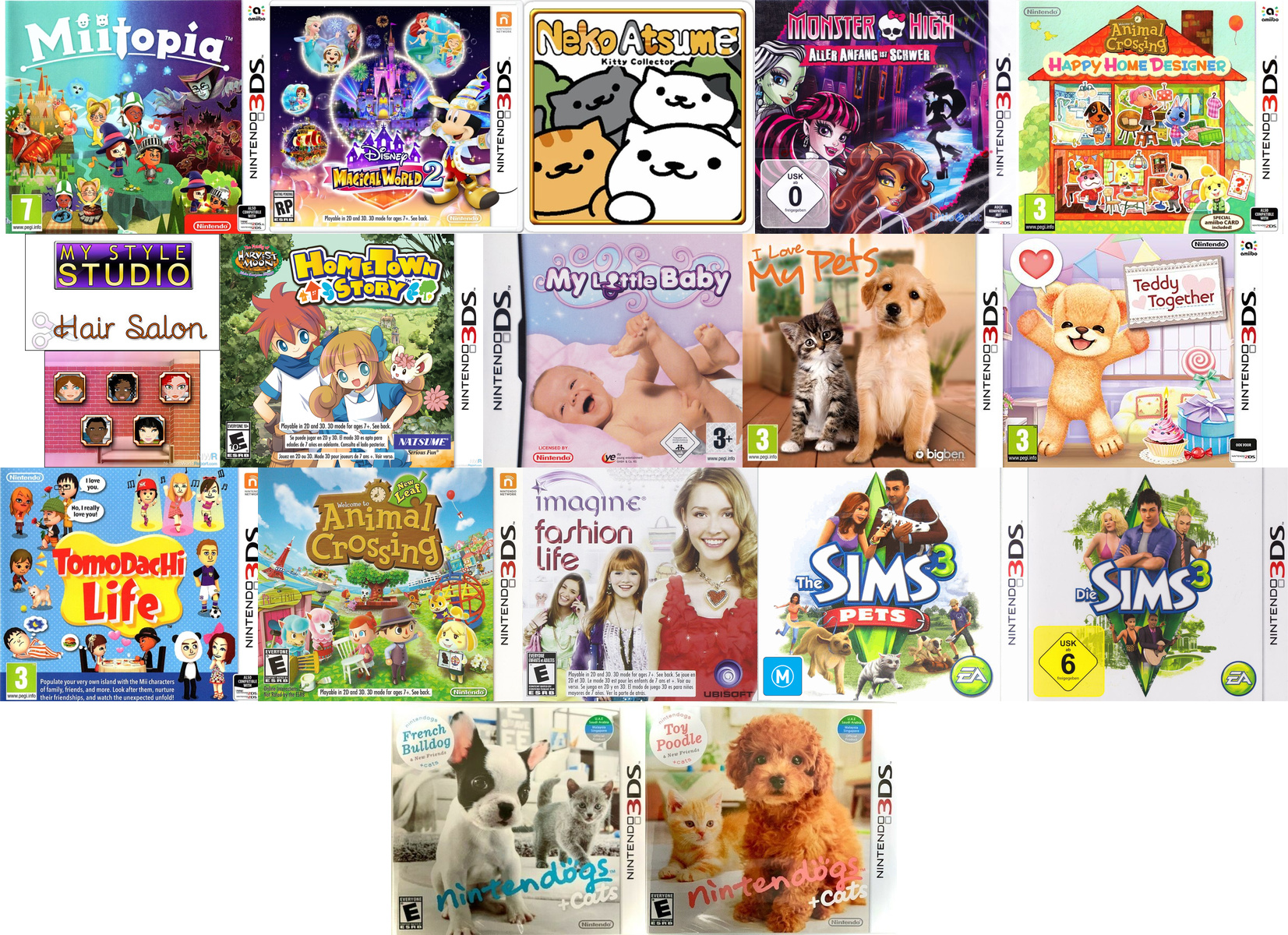
Neko Atsume: Kitty Collector: Neko Atsume: Kitty Collector turns the simple act of attracting and watching cats into a surprisingly relaxing experience. Rather than offering traditional action or complicated objectives, the game revolves around placing food, toys and other items in your garden and waiting for different cats to visit. The charming artwork, variety of collectible cats and laid-back presentation make it easy to dip into for a few minutes at a time. Its biggest weakness is the repetitive nature of the gameplay, as there is little to do beyond arranging items and checking which cats have appeared, but for players looking for a peaceful and uncomplicated 3DS experience, it has considerable charm.
Miitopia: Miitopia is a lighthearted RPG that combines traditional turn-based battles with Nintendo’s Mii characters and a deliberately silly sense of humor. Creating a party from friends, family members or other Miis gives the adventure a personal touch, while the different jobs provide enough variety to keep combat interesting. The story is intentionally goofy rather than particularly deep, but its playful dialogue and constant Mii-based situations give the game a distinctive personality. Some battles and exploration sections can become repetitive, and the automated behavior of party members is not always ideal, but Miitopia remains an entertaining and unusually accessible RPG.
Disney Magical World 2: Disney Magical World 2 offers a large collection of Disney-themed activities wrapped around a gentle life-simulation framework. Players can interact with familiar Disney characters, decorate their home, collect costumes, complete quests, explore different areas and participate in various mini-games. The sheer amount of content is impressive, particularly for younger players and Disney fans, although the repetitive quest structure and relatively simple mechanics can make the experience feel somewhat shallow over time. Its colorful presentation and enormous amount of Disney fan service nevertheless make it an enjoyable casual adventure.
Monster High: New Ghoul in School: Monster High: New Ghoul in School is a straightforward adventure aimed primarily at fans of the Monster High franchise. Players create a new student and explore the school while completing quests, meeting familiar characters and taking part in various activities. The game captures the visual style and personalities of the series reasonably well, but the gameplay is fairly basic, with repetitive objectives and limited challenge. It lacks the polish and depth of stronger 3DS adventures, yet younger players and Monster High fans may still find its school-life setting and recognizable cast appealing.
Animal Crossing: Happy Home Designer: Animal Crossing: Happy Home Designer focuses almost entirely on the decorating side of Animal Crossing, allowing players to design houses for villagers according to their individual requests. The freedom to arrange furniture, experiment with layouts and gradually unlock new design possibilities makes it a satisfying creative tool, particularly for players who enjoy interior decoration. However, the absence of the traditional Animal Crossing town-life structure means it feels more like a specialized spin-off than a complete Animal Crossing experience. Its limited emphasis on exploration and daily-life activities may disappoint some fans, but the decorating mechanics are enjoyable and surprisingly flexible.
Disney Magical World: Disney Magical World brings Disney characters and locations into an Animal Crossing-like life simulation, with players completing quests, decorating their home, collecting outfits and participating in numerous activities. Its greatest strength is the sheer variety of Disney-themed content, with plenty of familiar characters and environments to discover. The basic gameplay loop can become repetitive, especially when quests start to feel similar, and the simulation elements are not as deep as those in Animal Crossing. Nevertheless, the colorful presentation, accessible mechanics and abundance of Disney fan service make it a pleasant casual game.
My Style Studio: Hair Salon: My Style Studio: Hair Salon is a simple fashion and hairstyling simulation that lets players experiment with different looks and run their own virtual salon. The game is clearly designed for a younger audience, with straightforward controls and an emphasis on creativity rather than challenge. Styling customers and trying different hairstyles can be amusing for a while, but the limited depth means that the novelty wears off fairly quickly. It works best as a short, casual experience for players who enjoy fashion and makeover games rather than as a substantial simulation.
Hometown Story: Hometown Story attempts to combine shop management, life simulation and role-playing elements into a charming small-town adventure. Players inherit a shop and gradually expand it while meeting local residents, completing tasks and learning more about their stories. The concept has considerable potential, and the peaceful atmosphere suits the genre, but the slow pace, awkward interface and sometimes frustrating progression make the experience less enjoyable than it could have been. There are interesting ideas underneath the rough execution, but the game requires patience from players willing to overlook its mechanical shortcomings.
My Little Baby: My Little Baby is a straightforward baby-care simulation centered around looking after a virtual infant. Players can feed, bathe, dress and entertain the baby through a collection of simple activities designed primarily for younger audiences. The touch-screen interaction fits the concept reasonably well, but the repetitive tasks and lack of meaningful progression limit its long-term appeal. Its gentle presentation and uncomplicated mechanics make it accessible, although older players are unlikely to find enough depth to keep them engaged for very long.
I Love My Pets: I Love My Pets is a casual pet-care simulation that lets players look after a selection of virtual animals through feeding, grooming, playing and other basic activities. The game is clearly aimed at younger players and keeps its mechanics extremely simple, making it easy to understand without much instruction. The cute presentation gives it some appeal, but the limited variety of activities and repetitive routine prevent it from becoming a particularly deep simulation. It can provide some brief entertainment for animal lovers, but its simplicity quickly becomes apparent.
Teddy Together: Teddy Together is a gentle virtual-pet game built around caring for and interacting with a talking teddy bear. Players can feed, dress and play with their bear while gradually developing a relationship through conversations and daily activities. The conversational element gives it more personality than many basic pet simulations, and the relaxed pace makes it an easygoing game to play in short sessions. However, the activities are fairly limited and the repetitive routine may eventually become tiresome. Its appeal depends heavily on whether the player enjoys the idea of maintaining a virtual companion.
Tomodachi Life: Tomodachi Life is one of the strangest and most entertaining life-simulation games on the 3DS, turning Mii characters into unpredictable residents of a bizarre virtual island. Players can feed them, dress them, give them apartments and watch their relationships develop, often producing completely unexpected and humorous situations. The game is less about traditional objectives and more about observing what happens, which gives it a unique personality and considerable replay value. Its lack of direct control over many events can be frustrating for players seeking conventional gameplay, but the sheer unpredictability of the simulation is what makes Tomodachi Life memorable.
Animal Crossing: New Leaf: Animal Crossing: New Leaf offers one of the most relaxing and content-rich life simulations on the Nintendo 3DS. As the town’s mayor, players can decorate their home, collect furniture, fish, catch insects, participate in seasonal events and gradually improve the community while interacting with a charming cast of animal villagers. Its real-time structure encourages returning regularly rather than rushing toward an ending, and the enormous amount of customization gives the game remarkable longevity. The slow pace and lack of conventional goals will not appeal to everyone, but for players who enjoy relaxed exploration and collecting, New Leaf is an exceptionally rewarding experience.
Imagine: Fashion Life: Imagine: Fashion Life is a fashion-oriented simulation in which players pursue a career in the fashion world by designing outfits, styling characters and completing various career-related activities. The concept provides plenty of opportunities to experiment with clothing and appearances, while the touch-screen controls make many of the activities accessible. Unfortunately, the gameplay is fairly repetitive and lacks the depth of more sophisticated fashion-management titles. Its colorful presentation and straightforward mechanics make it suitable for younger players, but experienced gamers may find the career progression and challenges rather shallow.
The Sims 3: Pets: The Sims 3: Pets expands the familiar life simulation formula with a greater emphasis on animal companions. Players can create and control pets, care for them and integrate them into their Sims’ everyday lives, adding another layer of unpredictability to the simulation. The 3DS version captures some of the appeal of The Sims while simplifying the experience considerably compared with the larger console and PC editions. The pet-focused additions are enjoyable, but technical limitations, simplified mechanics and a smaller world prevent it from reaching the depth associated with the main series.
The Sims 3: The Sims 3 for Nintendo 3DS brings the basic life-simulation formula to Nintendo’s handheld with character creation, home customization, relationships, careers and everyday activities. The ability to create a Sim and guide their life remains entertaining, and the portable format works well for short sessions. However, the game is noticeably more limited than the PC and home-console versions, with a smaller environment and simplified systems. Despite those compromises, it still offers enough freedom and experimentation to provide an enjoyable handheld version of the classic simulation.
Nintendogs + Cats: French Bulldog & New Friends: Nintendogs + Cats: French Bulldog & New Friends is a relaxing pet simulation built around raising and interacting with virtual dogs and cats. Players can feed, groom, train and play with their pets using the 3DS touch screen and microphone, while the 3D presentation adds some extra charm to the experience. The animals are convincingly animated and the gentle daily routine makes the game particularly accessible to younger players and casual gamers. The limited gameplay variety means it is not a demanding experience, but its focus on companionship remains genuinely appealing.
Nintendogs + Cats: Toy Poodle & New Friends: Nintendogs + Cats: Toy Poodle & New Friends follows the same winning formula as the other Nintendogs + Cats editions, offering a virtual pet experience centered on caring for, training and playing with adorable dogs and cats. The Toy Poodle provides a distinctive breed option while the rest of the game revolves around feeding, grooming, walking and participating in competitions. Its touch-screen interaction and expressive animals give it a warm and accessible personality, although the repetitive daily activities can eventually become predictable. For players who enjoy virtual pets and relaxing games, however, it remains one of the more charming examples of the genre on the 3DS.
———————————————
Neko Atsume: Kitty Collector (2017) Originally a hit mobile idle game, this 3DS release retains the charmingly simple premise of laying out food, toys, and cushions in your yard to attract a variety of cute cats. While it doesn’t offer deep gameplay mechanics, checking in periodically to collect fish currency, fill out your Catbook, and take photos of visiting felines makes for a remarkably relaxing, low-stress digital pet experience.
Miitopia (2016) Miitopia turns lighthearted turn-based RPG mechanics into a goofy, personalized adventure by letting players cast their own Mii avatars as the heroes, townsfolk, and even the main villain. Its charm lies heavily in the unpredictable interactions between party members during inn stays and battles, making for a delightfully eccentric, casual role-playing journey even if the combat can occasionally feel repetitive.
Disney Magical World 2 (2016) Building on the foundation of its predecessor, this sequel offers an immersive life-simulation experience where players create a custom avatar to live alongside iconic Disney characters across themed worlds like Frozen, The Little Mermaid, and Lilo & Stitch. With a well-balanced mix of questing, crafting, café management, and fishing, it delivers a surprisingly feature-rich and enchanting loop tailored well to fans of the franchise.
Monster High: New Ghoul in School (2015) Set in the popular high school fashion universe, this third-person adventure lets players design their own ghoul and explore the halls of Monster High to resolve student drama and prepare for the upcoming dance. Although the storyline and simple fetch quests strictly target younger fans of the franchise, the customisation options and faithful reproduction of the show’s aesthetic offer decent fan service despite lightweight gameplay.
Animal Crossing: Happy Home Designer (2015) Shifting away from the traditional village-life simulation, this spin-off focuses exclusively on interior and exterior decoration by placing players in the role of a designer working for Lottie’s housing agency. By removing the wait times and resource grinding of main titles, it serves up a purely creative, sandbox-style experience that gives fans immediate access to vast furniture catalogs, though the lack of true scoring or challenge limits its long-term depth.
Disney Magical World (2014) Combining element of life simulators with light action-RPG dungeon crawling, this title lets players manage a customizable Disney café, collect outfit cards, and venture into worlds based on Cinderella, Alice in Wonderland, and Aladdin. Its engaging loop of gathering materials to craft furniture and items keeps the gameplay loop surprisingly addictive, serving as a charming alternative to standard life sims.
My Style Studio: Hair Salon (2013) Designed primarily for young children, this budget title lets players wash, cut, color, and style the hair of various cartoon clients using simple touchscreen controls. While accessible and easy to pick up, its lack of game modes, minimal variation in client requests, and basic presentation make it a short-lived distraction rather than a fully realized simulation.
Hometown Story (2013) Created by Harvest Moon creator Yasuhiro Wada, Hometown Story focuses on running a small village shop and building relationships with local residents by uncovering their personal backstories. Despite its wholesome atmosphere and charming soundtrack, clunky inventory management, slow pacing, and cryptic progression triggers hinder what could have been a deeply rewarding store management simulator.
My Little Baby (2013) This virtual pet simulator challenges players with the day-to-day responsibilities of raising an infant, from feeding and bathing to teaching basic skills using 3DS touch and microphone interactions. The realistic needs and steady development of the baby provide an interactive experience for younger players interested in caregiving, though the gameplay loop quickly becomes repetitive over extended play sessions.
I Love My Pets (2013) A straightforward pet care management game, I Love My Pets tasks players with feeding, grooming, training, and playing with a variety of puppies and kittens in a virtual hotel setting. While it fulfills the basic premise of a casual animal-simulation title, its plain visuals and repetitive minigames mean it offers little to stand out against stronger competitors on the platform.
Teddy Together (2013) Published by Nintendo in western regions, Teddy Together centers around a living teddy bear that moves in with the player, asking questions to learn more about them and forming a friendship over time. With fully voiced dialogue and interactive activities like cooking and gardening, it acts as a cozy, kid-friendly companion game, though its interaction model is quite linear.
Tomodachi Life (2013) Tomodachi Life places imported Mii characters on a secluded island where they live, interact, fall in love, and get into bizarre situations entirely on their own. Combining quirky surrealist humor with simple caretaking and customization elements, it offers a hilarious, unpredictable window into Mii drama that remains one of the most uniquely memorable titles on the 3DS.
Animal Crossing: New Leaf (2012) Widely regarded as one of the peak entries in the franchise, New Leaf casts the player as the mayor of their town, giving them unprecedented control over Public Works Projects, town ordinances, and community aesthetics. Paired with deep customisation, real-time seasonal events, and extensive online features, it delivers an immensely charming, relaxing, and addictive life simulation that defined the 3DS library.
Imagine: Fashion Life (2012) Part of Ubisoft’s long-running Imagine series, this title allows players to embark on a career in the fashion industry by managing a boutique, designing outfits, and styling models for fashion shows. The touchscreen design mechanics offer brief creative fun for its target demographic, though the predictable progression and basic visuals keep it strictly in the casual tier.
The Sims 3: Pets (2011) Bringing the companion-focused expansion of The Sims 3 to portable 3D, this handheld entry allows players to create, control, and live alongside dogs and cats while managing their Sims’ daily needs and careers. While it successfully translates core franchise mechanics into a portable format, noticeable performance hiccups and reduced world sizes keep it from matching the depth of its PC counterpart.
The Sims 3 (2011) A launch-window adaptation of the iconic PC life simulator, The Sims 3 on 3DS gives players direct control over custom Sims, home building, and career paths, with added 3D visual flair and Karma powers. While impressive as an early showcase of full 3D life simulation on a handheld, performance limitations, long loading times, and a restricted open world make it a scaled-down version of the main game.
Nintendogs + Cats: French Bulldog & New Friends (2011) Serving as a launch showcase for the 3DS, this entry updates the hit DS pet-care formula with sharp 3D graphics, facial recognition via the inner camera, and the long-awaited inclusion of feline companions. Choosing the French Bulldog version grants early access to specific dog breeds, delivering a warm, highly tactile virtual pet experience that fully utilizes the system’s unique hardware features.
Nintendogs + Cats: Toy Poodle & New Friends (2011) Sharing the core gameplay features of the French Bulldog edition, this version highlights the Toy Poodle alongside a starter selection of other popular breeds. Excellent use of StreetPass for trading gifts, responsive touch and voice controls, and detailed animal animations make it an ideal, accessible showcase of the 3DS’s hardware capabilities.