Dead or Alive
Gameplay: Built on the Virtua Fighter engine, this debut entry introduces the franchise’s signature counter-attack mechanics and “Danger Zones”—explosive outer floor boundaries that blast characters into the air for massive combo extensions when struck.
Graphics: The Sega Saturn port utilizes the console’s dual-CPU architecture to deliver highly impressive, fluid 3D character models that hold up remarkably well next to the arcade original, complete with fully animated 2D backgrounds and the series’ infamous, exaggerated physics.
Sound: It features a high-energy, synthesizer-heavy arcade soundtrack accompanied by sharp, punchy impact sound effects and authentic Japanese voice acting that perfectly encapsulates late-90s fighting game atmosphere.
Dead or Alive on the Sega Saturn was a surprisingly impressive port for its time, bringing fast-paced 3D fighting, flashy counter mechanics, and smooth animation to the console with very little compromise. The game stood out because of its interactive stages and simple but satisfying combat system that rewarded timing over complicated inputs. While its roster and content were smaller compared to later entries in the series, the Saturn version still felt technically advanced and showcased how capable the hardware could be with polygonal fighters.
Final Fight Revenge
Gameplay: Shifting the iconic beat-’em-up franchise into a clunky 3D one-on-one fighter, the game relies heavily on a bizarre weapon-pickup system where characters scavenge the arena for guns, pipes, and health items, resulting in a chaotic but ultimately stiff and unbalanced combat loop.
Graphics: As one of the rare titles utilizing the Saturn’s 4MB RAM expansion cartridge, it pushes detailed character models, though the overall aesthetic suffers from rigid polygonal animations and muddy, uninspired 3D arena backgrounds.
Sound: The audio presentation delivers a gritty, urban-inspired soundtrack mixed with classic arcade grunts and weapon impact noises that try to capture the original Metro City vibe, though it can feel repetitive during longer play sessions.
Final Fight Revenge attempted to transform Capcom’s classic beat-’em-up universe into a 3D fighting game, but the result was awkward and rough around the edges. The gameplay lacked the polish and responsiveness expected from Capcom fighters, and the stiff movement made battles feel clunky. Still, fans of the Final Fight series may appreciate seeing familiar characters in a different genre, even if the overall experience feels more like an experimental curiosity than a true classic.
Marvel Super Heroes
Gameplay: This masterpiece refines Capcom’s signature chain-combo system and introduces the brilliant “Infinity Gem” mechanic, allowing players to activate unique tactical buffs like enhanced speed, power, or health recovery mid-match.
Graphics: Relying on the console’s optional 1MB RAM cart, the port serves as a near-flawless translation of the arcade, showcasing massive, brilliantly animated sprites, screen-shaking super moves, and gorgeous, multi-tiered interactive backdrops.
Sound: Driven by a frantic, heroic jazz-fusion soundtrack, the audio shines with crisp, iconic character voice clips and booming explosion sound effects that bring the comic book pages to life.
Marvel Super Heroes was one of the Sega Saturn’s finest arcade conversions, delivering colorful visuals, fluid animation, and the chaotic energy of Capcom’s Marvel fighters almost perfectly at home. The Infinity Gem system added strategic variety without overwhelming players, and the roster featured iconic Marvel characters that made every match exciting. Thanks to the Saturn’s RAM cartridge support, the game retained excellent animation quality and loading performance, making it one of the best ways to enjoy the title outside the arcade.
Night Warriors: Darkstalkers’ Revenge
Gameplay: Expanding on the original gothic fighter, this entry introduces the ability to stock multiple special bars for devastating “EX Moves” and introduces chain-combo mechanics that elevate the fast-paced, highly aggressive matches.
Graphics: The Saturn handles Capcom’s beautifully fluid, fluidly animated monster sprites effortlessly, delivering stunning cartoon-quality frames, vibrant special effect colors, and incredibly creative, atmospheric arena backdrops without requiring a RAM expansion.
Sound: A hauntingly catchy, upbeat arcade soundtrack pairs beautifully with distinct, high-quality audio cues, from eerie monster growls to the crisp, rhythmic snapping of fast-paced combos.
Night Warriors: Darkstalkers’ Revenge remains one of the most stylish 2D fighters on the Sega Saturn, combining gothic horror themes, fluid sprite animation, and inventive gameplay mechanics into a highly memorable package. Each character feels unique both visually and mechanically, while the fast pace and chain-combo system keep fights exciting. The Saturn handled the arcade-quality visuals exceptionally well, making this version a favorite among retro fighting game enthusiasts.
Samurai Spirits Amakusa Kourin (Samurai Shodown IV)
Gameplay: This weapon-based fighting classic emphasizes high-stakes tension and precise spacing, featuring a refined “Slash” and “Bust” character playstyle split, multi-grade speed settings, and a lethal dial-a-combo system that can deplete health bars in seconds.
Graphics: Pushed to its limits via the 1MB RAM cartridge, the Saturn version delivers massive, beautifully detailed historical Japanese character sprites, gorgeous shifting backgrounds, and dramatic, screen-filling slash animations that capture the game’s intense, bloody tone.
Sound: The game utilizes an atmospheric, traditional Japanese theatrical score featuring instruments like the shamisen and shakuhachi flutes, punctuated by booming announcer callouts, dramatic sword clashes, and agonizing battle cries.
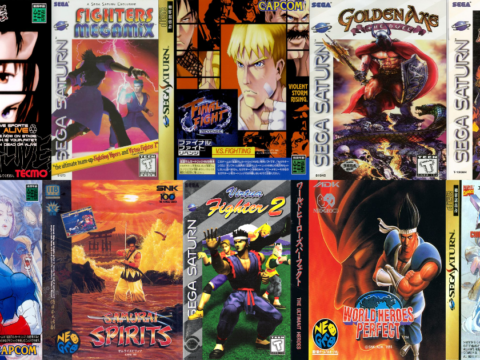
Samurai Spirits Amakusa Kourin (Samurai Shodown IV) delivered intense weapon-based combat with a darker tone and faster gameplay than earlier entries in the series. The Sega Saturn version preserved the dramatic atmosphere, detailed sprites, and brutal combat mechanics that SNK fans loved in the arcade. Matches felt tense and tactical, with high damage output rewarding patience and precision, while the strong soundtrack and visual style helped create one of the most memorable entries in the franchise.
Virtua Fighter 2
Gameplay: Widely considered the gold standard of 3D fighting on the platform, AM2’s masterpiece delivers an incredibly deep, physics-based martial arts simulation that rewards precise frame data knowledge, fluid counter-poking, and tactical positioning.
Graphics: A technical marvel for the hardware, it runs at a blistering, locked 60 frames per second at a high resolution (704×480), using beautifully smooth polygonal models against crisp, detailed 2D wallpaper backgrounds to achieve arcade visual fidelity.
Sound: It pairs a legendary, upbeat arcade rock and jazz fusion soundtrack with highly distinct martial arts grunts, heavy impact effects, and crisp ring-out audio cues that heighten the competitive tension.
Virtua Fighter 2 is widely considered one of the Sega Saturn’s defining games thanks to its groundbreaking 60 FPS performance, smooth controls, and deep martial arts combat system. Unlike flashier arcade fighters, it focused on precision, movement, and technical mastery, giving every fight a realistic and competitive feel. The visuals were remarkably advanced for the era, and the game demonstrated how powerful the Saturn could be when developers fully understood the hardware.
World Heroes Perfect
Gameplay: The absolute pinnacle of ADK’s time-traveling fighting series, this final entry streamlines the controls into a standard four-button layout, balancing the wacky roster with an “Hero Gauge” for powerful inputs and tactical ABC-button defensive counters.
Graphics: Utilizing the Saturn’s internal architecture beautifully, the port features exceptionally bright, colorful 2D historical sprites and animated backdrops that perfectly mimic the Neo Geo arcade hardware with zero frame drops.
Sound: The audio delivers an incredibly upbeat, campy soundtrack tailored to each historical era, mixed with loud, exaggerated character voice lines and classic 90s arcade impact noises.
World Heroes Perfect refined the chaotic and often unbalanced gameplay of earlier entries into a much more enjoyable 2D fighter. The Sega Saturn version featured a large cast, colorful stages, and fast gameplay that captured SNK’s arcade style well. While it never reached the popularity of Street Fighter or King of Fighters, its quirky characters and humorous presentation gave it a distinct charm that retro fighting game fans still appreciate today.
X-Men: Children of the Atom
Gameplay: The foundational blueprint for the entire Marvel vs. Capcom lineage, this fighter introduces hyper-fast gameplay, massive super jumps, rolling recovery tech, and highly destructive multi-hit mutant powers.
Graphics: As an early Capcom port, it pushes the Saturn’s native 2D capabilities to their absolute limit to render massive comic-book accurate sprites and multi-layered, destructible floors, resulting in minor slowdowns that are easily forgiven by the sheer scale of the visual spectacle.
Sound: Blessed with an iconic, driving rock soundtrack, the audio presentation stands out with authentic voice lines pulled straight from the 90s animated series voice actors alongside explosive, earth-shattering sound design.
X-Men Children of the Atom was a landmark superhero fighting game that showcased Capcom’s incredible sprite animation and fast arcade gameplay on the Sega Saturn. The game captured the feel of Marvel comics with explosive special moves, oversized characters like Sentinel and Juggernaut, and beautifully animated attacks. Thanks to the Saturn RAM expansion cartridge, the port retained much of the arcade version’s visual quality, making it one of the system’s standout fighting games.
Sega Saturn games, fighting games